Supply Chain Resilience Consulting
1. End-to-End Supply Chain Visibility
- Real-time tracking of inventory, shipments, and supplier performance across the network
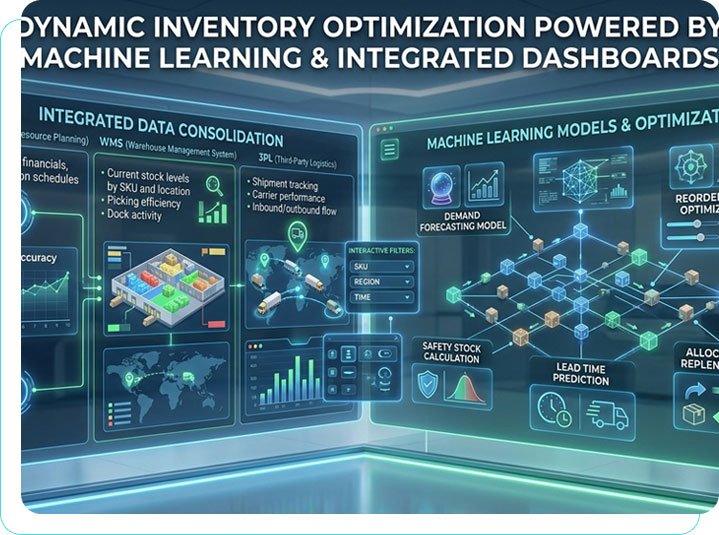
- Integrated dashboards consolidating data from ERP, WMS, and third-party logistics systems
- Predictive alerts for disruptions (weather, geopolitical, supplier delays)
2. Risk Assessment & Vulnerability Mapping
- Identification of single points of failure across tiers (Tier 1, 2, 3 suppliers)
- Risk scoring models based on geography, supplier financial health, and dependency concentration
- Scenario planning and stress-testing for disruption events (natural disasters, pandemics, geopolitical shifts)
3. AI/ML-Driven Demand & Supply Forecasting
- Predictive analytics to anticipate demand fluctuations and supply shortages
- Machine learning models for dynamic inventory optimization
- Early-warning systems for potential bottlenecks
4. Digital Twin & Simulation Modeling
- Virtual replicas of supply chain networks to test “what-if” scenarios
- Simulation of alternate sourcing, rerouting, or capacity changes before real-world implementation
- Impact analysis for cost, time, and service-level tradeoffs
5. Supplier Diversification & Network Optimization
- Data-driven recommendations for multi-sourcing strategies
- Supplier onboarding platforms with automated risk/compliance checks
- Network redesign for regional resilience (nearshoring, friend-shoring support)
6. Cybersecurity & Data Integrity for Supply Chains
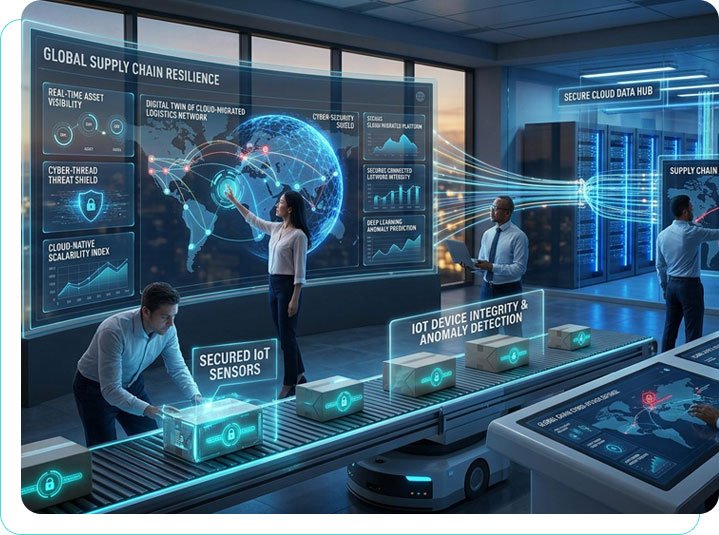
- Securing IoT devices, sensors, and connected logistics systems
- Protecting against supply chain cyberattacks (third-party vendor risk)
- Data governance frameworks ensuring integrity across partner ecosystems
7. Cloud-Based Integration & Interoperability
- API-driven integration connecting suppliers, logistics providers, and internal systems
- Cloud migration for scalable, flexible supply chain platforms
- Legacy system modernization for better data flow
8. Automation & Robotics Advisory
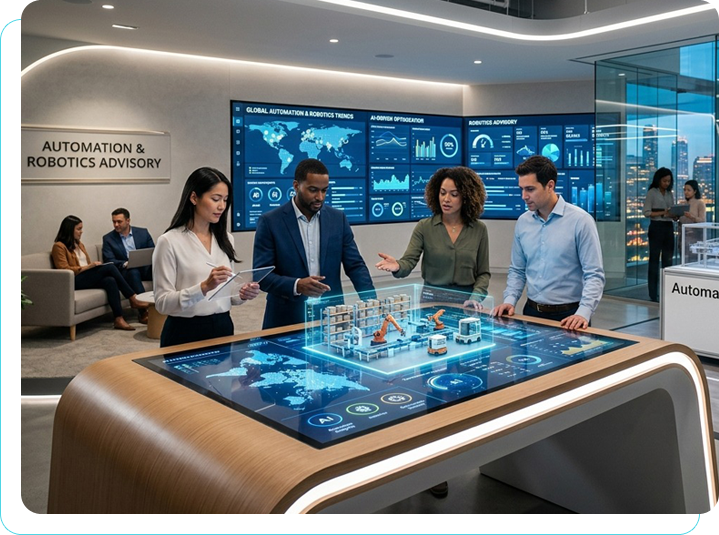
- Warehouse and logistics automation strategy (robotics, autonomous vehicles)
- RPA (Robotic Process Automation) for procurement and order management
- Process re-engineering to reduce manual intervention points
9. Business Continuity & Crisis Response Planning
- Rapid response playbooks for supply chain disruptions
- Alternate logistics/routing plans pre-modeled and ready to deploy
- Post-disruption recovery and lessons-learned frameworks
10. Compliance, ESG & Sustainability Tracking
- Tools for tracking regulatory compliance across regions
- ESG reporting and sustainable sourcing analytics
- Carbon footprint tracking integrated into supply chain decisions
11. Continuous Monitoring & Managed Services
- 24/7 monitoring of supply chain KPIs and risk indicators
- Ongoing optimization through managed analytics services
- Ongoing management of tools deployed
All Rights Reserved © www.vantetech.com. 2026